Data Model
One identity, every data point.
EON's data model unifies event and attribute data into a single knowledge graph per product — schema-flexible enough to power compliance, resale, authentication, and lifecycle intelligence from the same underlying record.
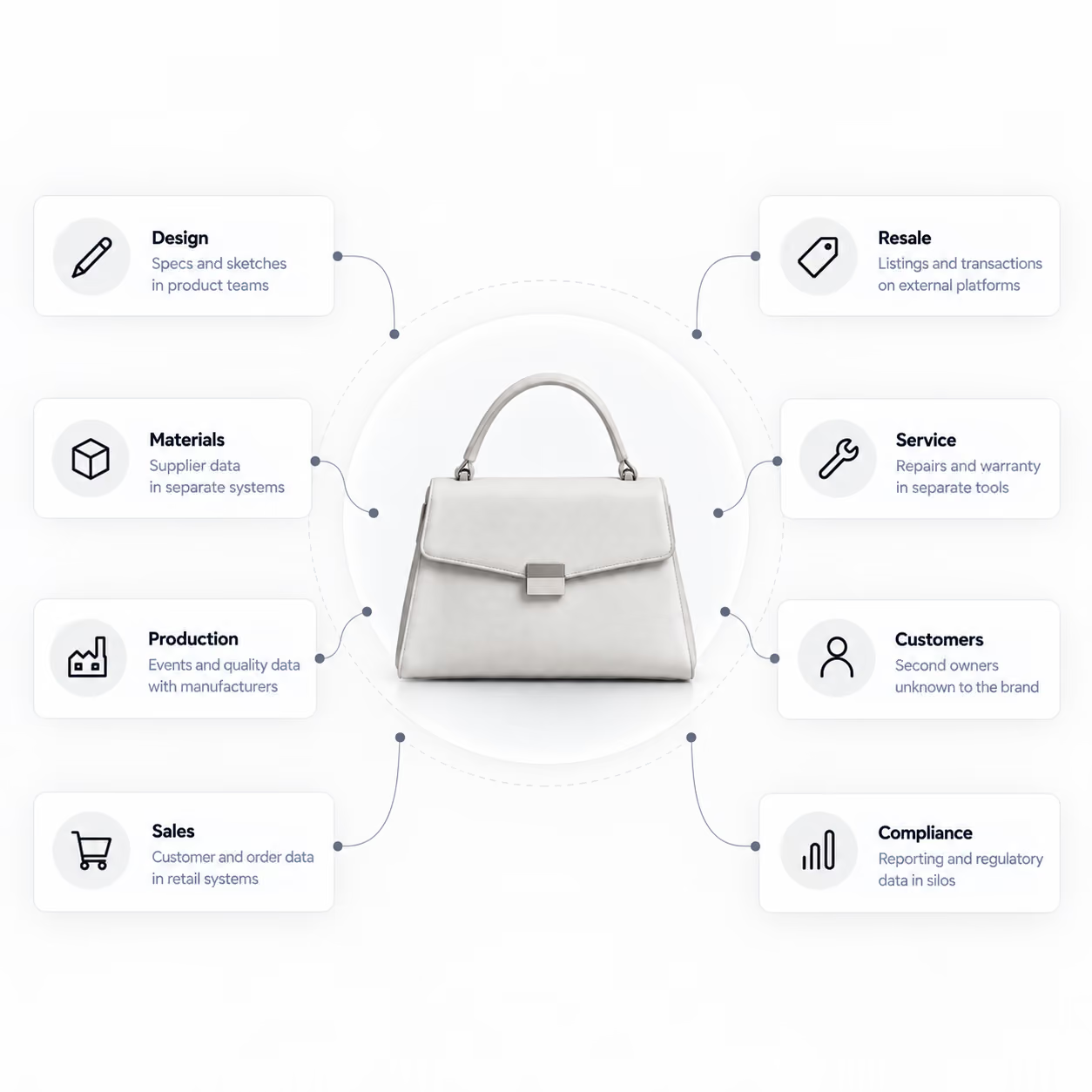
The product exists across systems, but nowhere completely.
A product is a SKU in an ERP, a spec in a PLM, a line item on an order, a carton in a WMS, a listing on a resale platform. Each is a useful projection of the product from one system's point of view — but no single projection follows the physical object through its entire life. The order closes. The carton is broken down at the dock. The listing is delisted. The physical object keeps going — changing hands, being repaired and resold, eventually recovered or taken apart — long after the systems that first described it have moved on. Every projection is an incomplete snapshot. None is a complete, continuously updated record.
There is no single point where a brand can ask "what do we actually know about this product right now" and get a complete, real-time answer — so the view always gets reconstructed manually, after the fact, every time someone needs it.
That reconstruction isn't free — it's a team pulling data from five systems before a deadline. Each requirement gets solved with its own workaround, so the cost compounds instead of resolving. What's changed is that this is no longer treatable as background cost: regulation now demands the answer in real time — a Digital Product Passport, a customs hold, a due-diligence disclosure — and the standards that make this solvable, from persistent digital identity to schema-flexible models, now exist and are being adopted at scale. Fragmentation was always the problem. Now, it’s no longer an option.
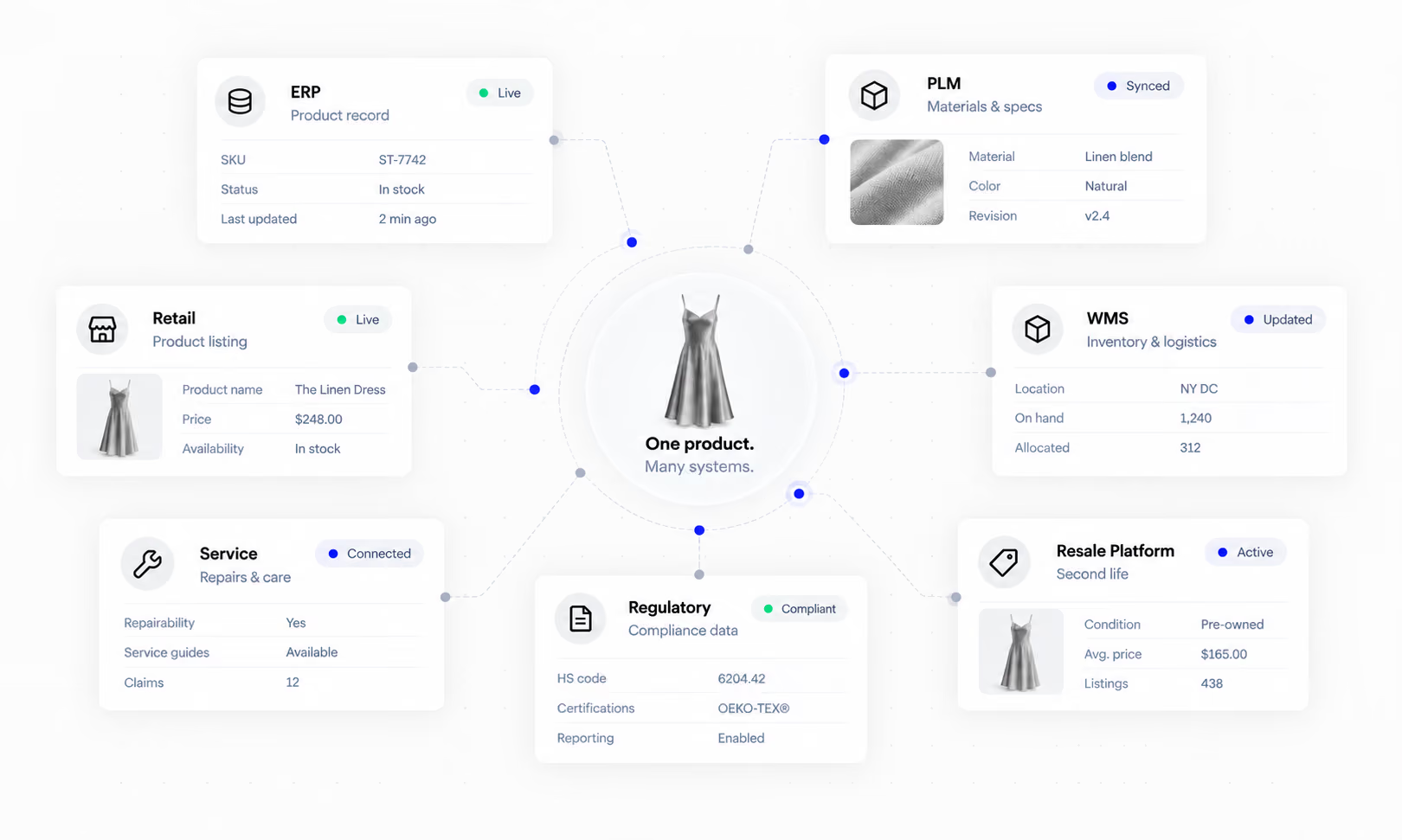
One identity. Everything a brand knows about a product, updated as it happens.
EON's data model starts with a persistent digital identity — assigned at whatever granularity a brand needs, from product line down to SKU, batch, or individually serialized unit. That identity becomes the one place everything about a product lives, instead of being scattered across the systems that each only saw part of it. This is the same identity layer that lets component-level traceability resolve all the way down to the material lot — one underlying model, applied at whatever level a given use case requires.
- Any granularity — identity assigned at the product, SKU, batch, or serialized unit level
- Ontology — defines how identities relate: parent-child, assembly, transformation, across the full product structure
- One record — answers "what is this," "what's it related to," and "what's happened to it" together
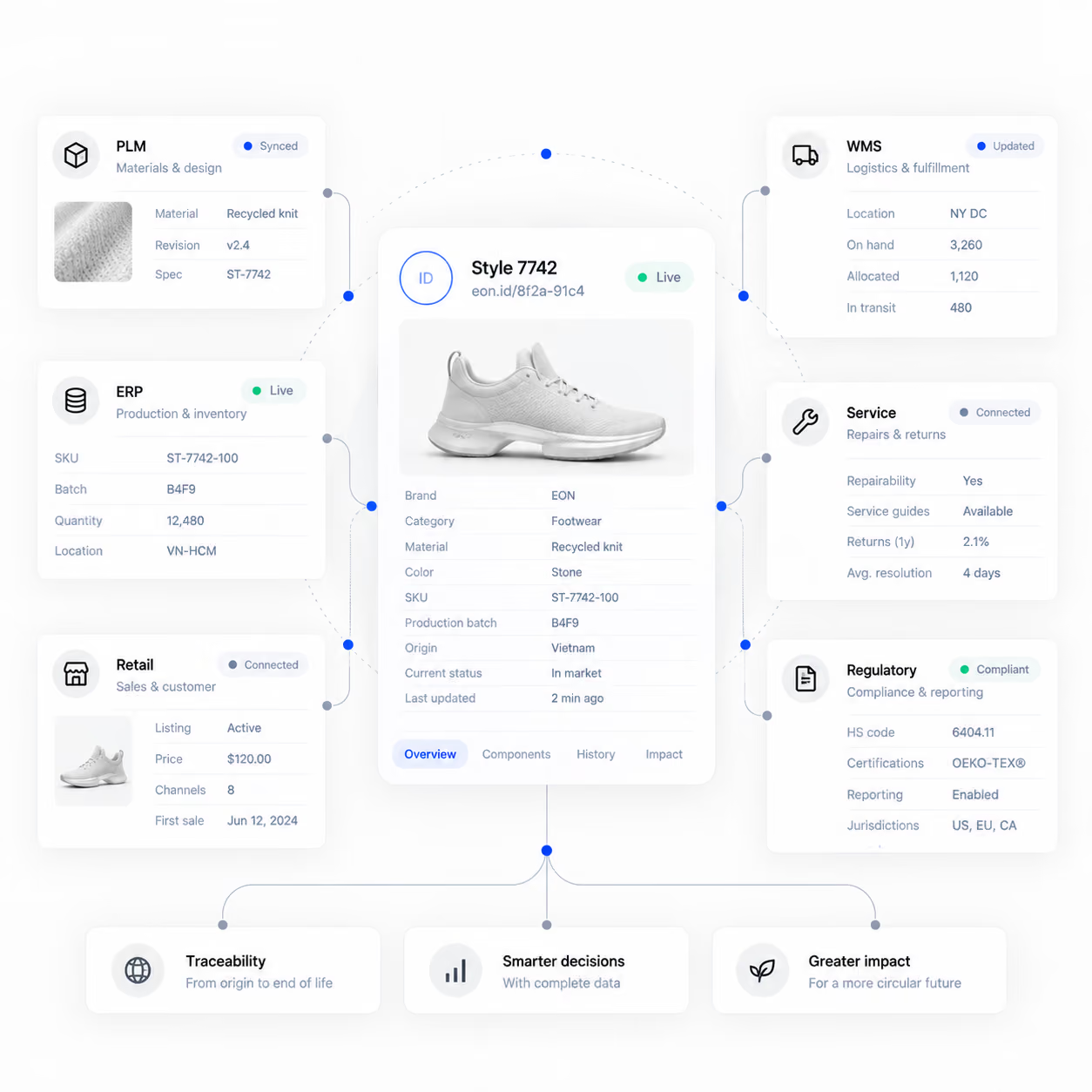
In order to mirror the complexity and granularity of the physical world, a data model has to manage data that describes, relates, and is captured.
EON handles all three kinds of product data natively, on the same record: what a product is, what it connects to, and what happens to it over time. Attributes, relationships, and lifecycle events all attach to a single identity — so a brand isn't stitching together separate tools to get one answer. It's querying one record that already has it.
This solves the reconstruction problem directly: the work of pulling data from five systems before a deadline, chasing a repair history that lives somewhere else, verifying authenticity by hand — disappears, because the answer already exists on the record instead of needing to be rebuilt every time someone asks. Now brands can answer a compliance question in minutes instead of weeks, build service and resale based on real product history instead of guesswork, and take on a new use case by drawing on data that already exists — instead of starting a new project to go get it.
The same knowledge graph, doing a different job for every team that queries it.
A record built once doesn't just answer one question — it answers whatever question a given team needs, because the underlying data was structured to support all of them from the start. The same identity, relationships, and event history that satisfies a regulator also powers a repair ticket, flags a trend, and verifies a resale — no separate system, no separate project, per use case.
- Compliance — a restricted material gets flagged, and the record shows exactly which units are affected, in minutes instead of weeks
- After-sales & service — a customer sends in a product for repair, and the full history — materials, prior repairs, warranty status — is already on the record
- Trend forecasting — merchandising teams query real event data (what's actually selling, returning, getting repaired) instead of working from sell-through reports alone
- Resale & authentication — a product's origin and ownership history verify it as genuine the moment it re-enters the market
- Brand protection — a counterfeit claim gets tested against the real record instead of a manual investigation
New fields and standards extend the model. They don't break it.
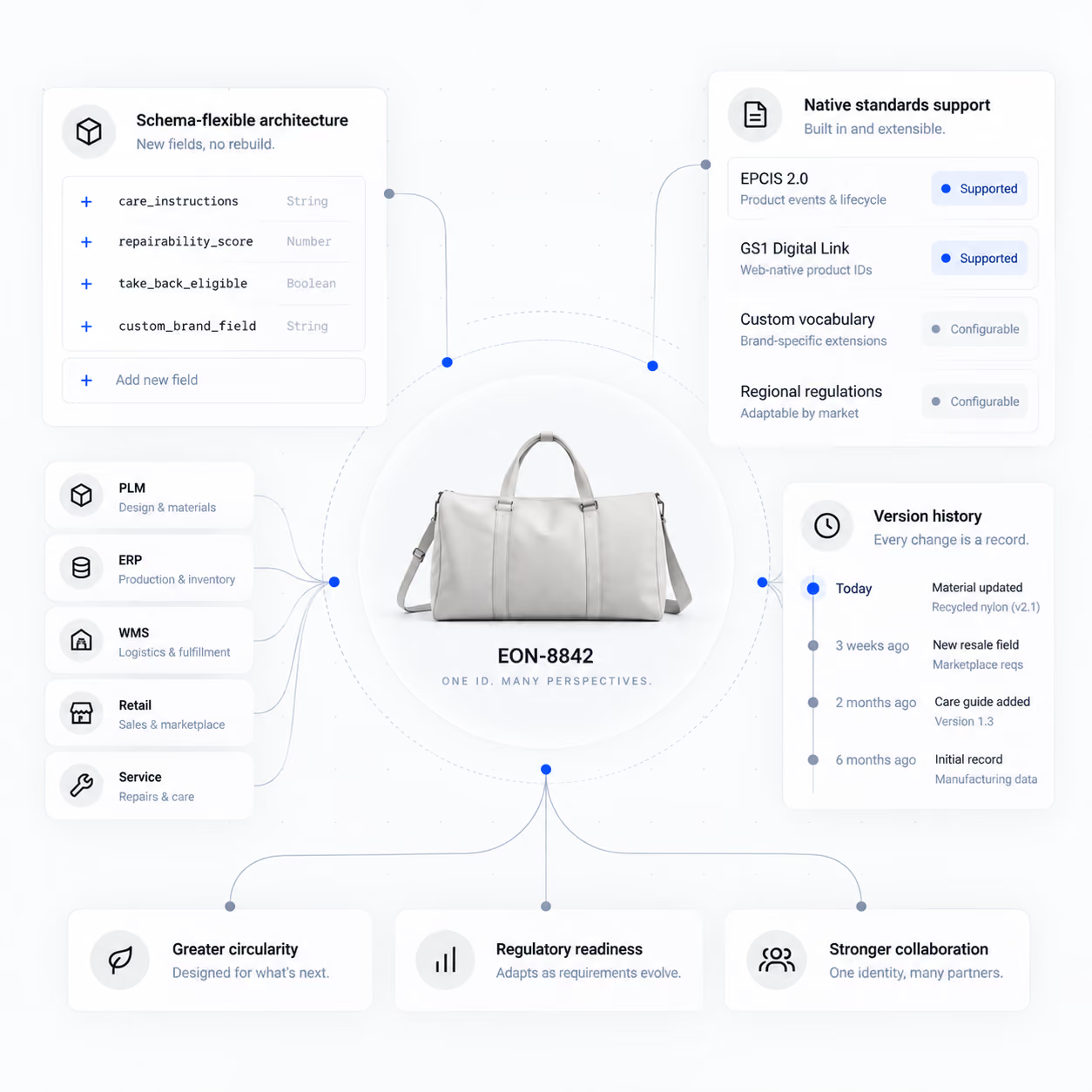
Every brand's data needs look slightly different, and every year brings a new format to support — a new regulation, a new certification, a new resale platform's requirements. EON's data model is schema-flexible: it adapts to new fields, attributes, and formats as they emerge, without a rebuild. EPCIS 2.0 and the GS1 Digital Link are supported natively for partners already structured that way, but the model was never built around a single standard — it was built to hold whichever one a brand, partner, or regulator requires.
- Schema-flexible architecture — new data extends the model, rather than forcing a rebuild
- Native standards support — EPCIS 2.0 and GS1 supported natively, alongside any custom business vocabulary
- Audit trail — updates to digital identities are recorded over time, preserving previous versions for historical review and auditability
Products change. The record doesn't overwrite — it accumulates.
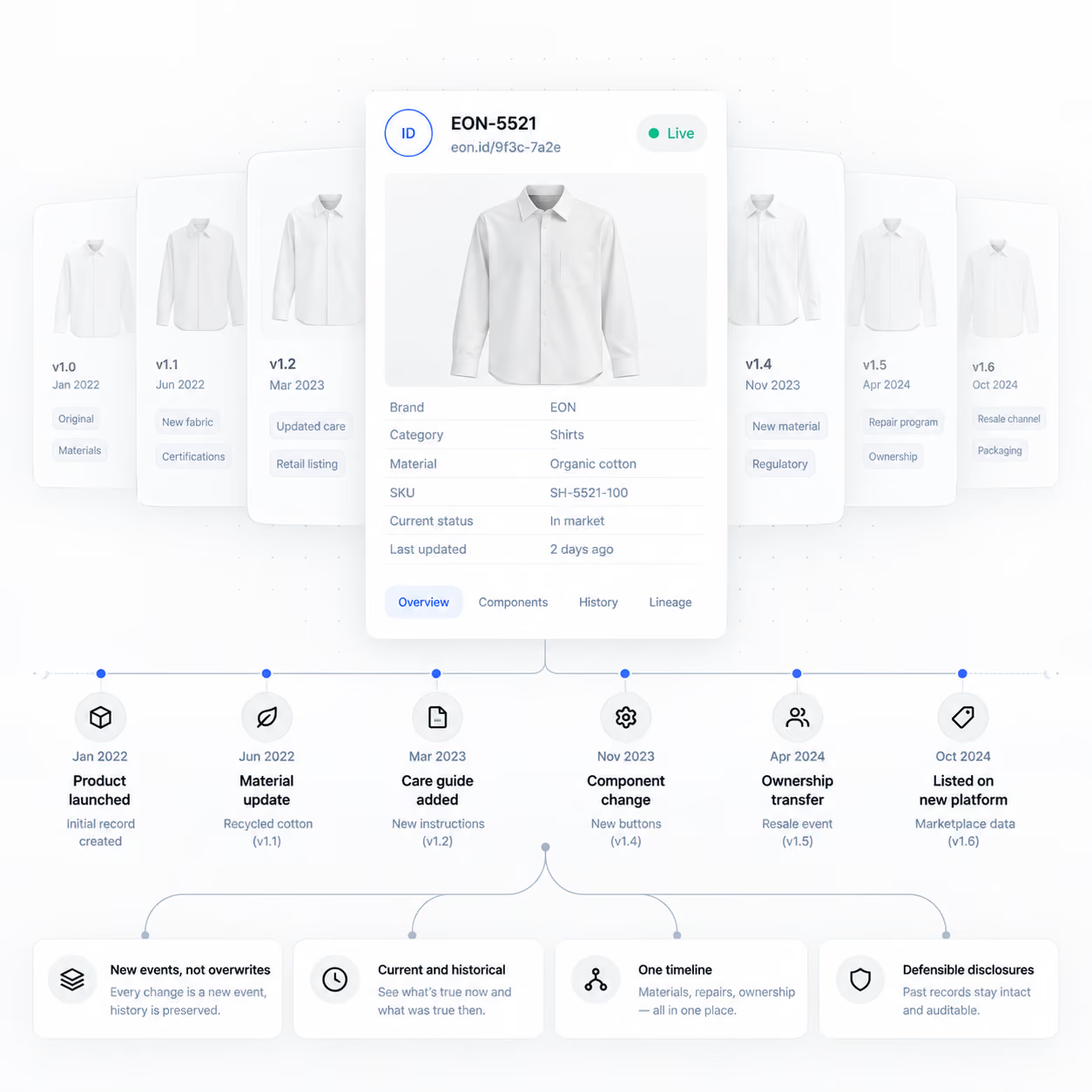
A product's data isn't static. Materials get reformulated, components get substituted, ownership changes hands, repairs get logged years after a sale. With EON’s EPCIS 2.0 Repository, EON is able to treat each event as a new update, not an over-ride to the old one — so the graph always reflects both what's true now and what was true at any point in the past. This keeps your enterprise audit-trails intact: a compliance disclosure filed two years ago has to still be defensible today, even if the product's composition has since changed.
- New events, not overwrites — event-driven EPCIS 2.0 repository treats every change as a new event, not an overwritten field; history is preserved, not lost
- Current and historical — a product's record reflects its current state and its full history
- One timeline — reformulations, substitutions, and ownership transfers all land on the same timeline
- Defensible disclosures — past disclosures stay defensible, because the record they were built from hasn't been altered after the fact
Any partner. Any format. One record, not a rebuild per source.
Brands already have trusted systems in place — traceability platforms, certification bodies, factory and supplier tools. EON doesn't ask brands to replace them or standardize first. It connects to the partners already in place, ingests whatever format each one already uses, and structures it into the product's knowledge graph as it arrives — validated and reconciled against the rest of the record, not layered on top of it.
Any format
Partner ecosystem
Self-service UI
Built-in validation
One record. Role-based visibility into it.
A single unified record only works if the right people see the right slice of it. EON's data model carries role-based access as part of the identity layer itself — a supplier sees what they contributed, a compliance team sees the audit trail, a customer sees their product's story — all drawn from the same underlying graph, permissioned rather than duplicated into separate views.
- Role-based access — built into the identity layer itself
- Permissioned views — suppliers, internal teams, and customers each see a permissioned view of the same record
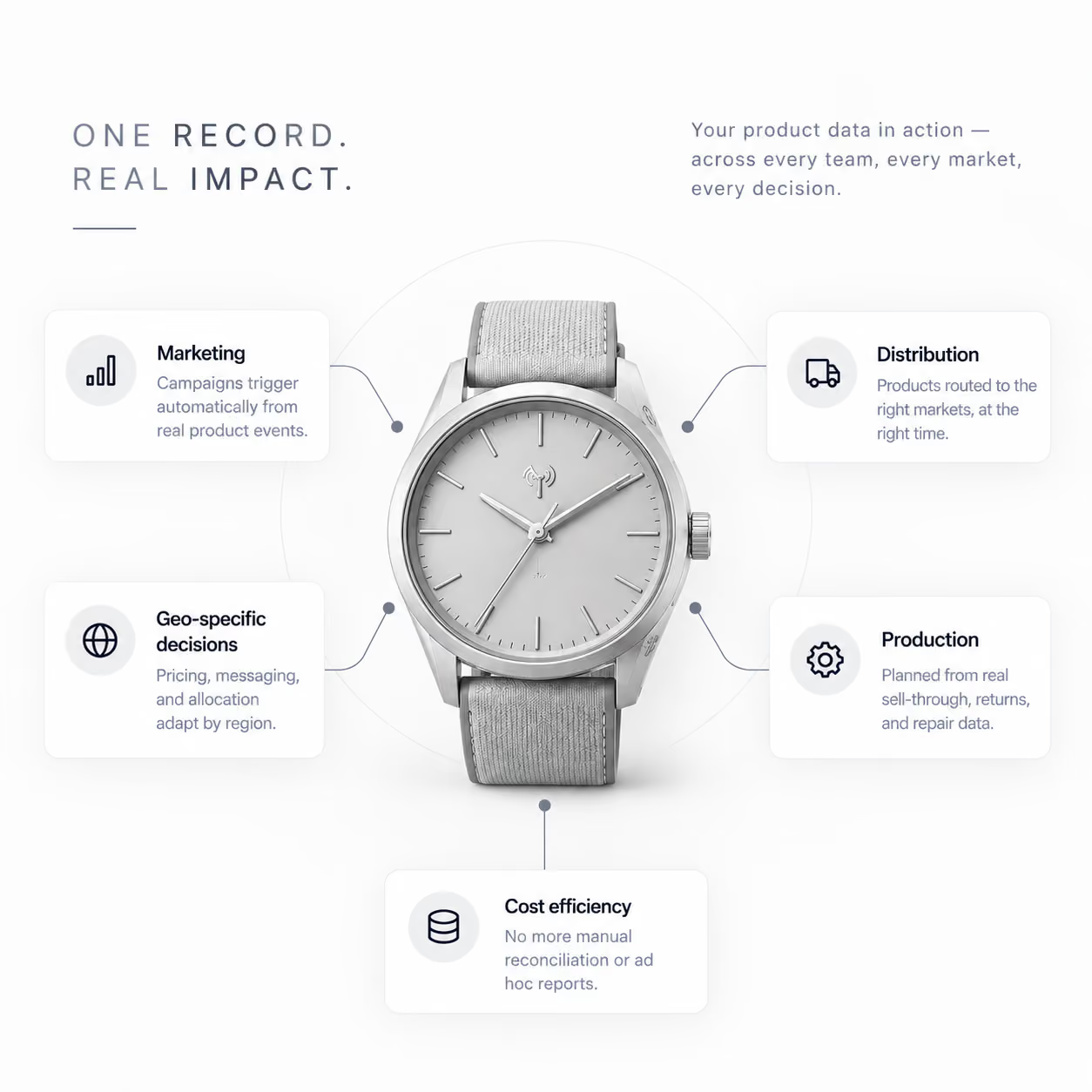
Your product data in action.
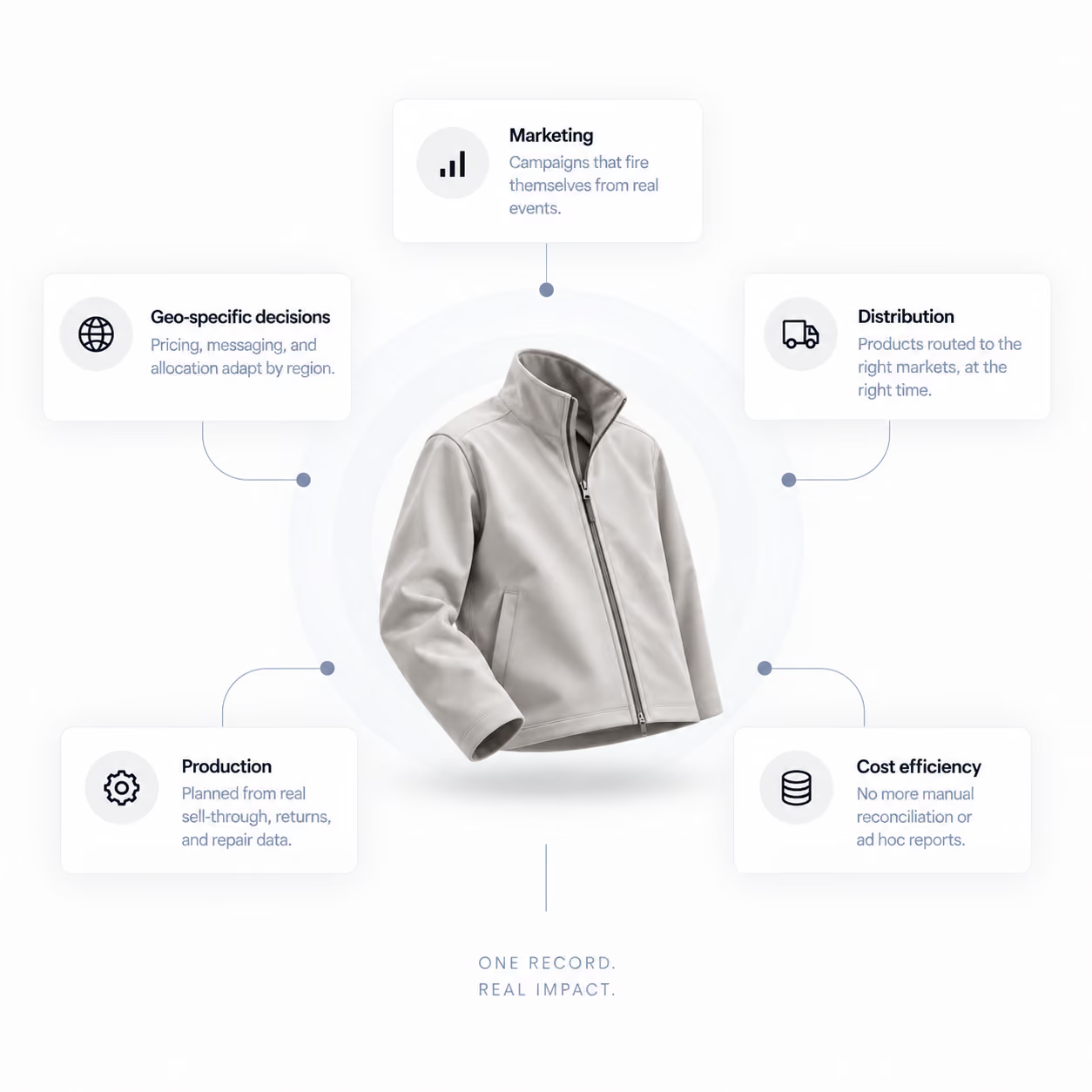
Product data itself starts driving decisions — automatically, at the speed data moves rather than the speed people do. Instead of chasing data, your teams can decide what to do with it.
- Marketing campaigns that fire themselves — a certification lands, a restock happens, a repair spikes on one SKU — and the campaign launches off the event, not off a marketer noticing it
- Distribution routed by the record, not a spreadsheet — products sent to the markets where they're compliant, in demand, or most profitable to sell, decided by the data instead of a quarterly planning cycle
- Geo-specific everything — pricing, messaging, and allocation shift by region automatically, because the record already knows what each market requires and rewards
- Production planned off what's actually happening — real sell-through, return, and repair data steering what gets made next, not last season's forecast
- Costs quietly disappear — every manual reconciliation, every ad hoc report, every "let me check with three teams" moment — replaced by a record that already knows the answer